
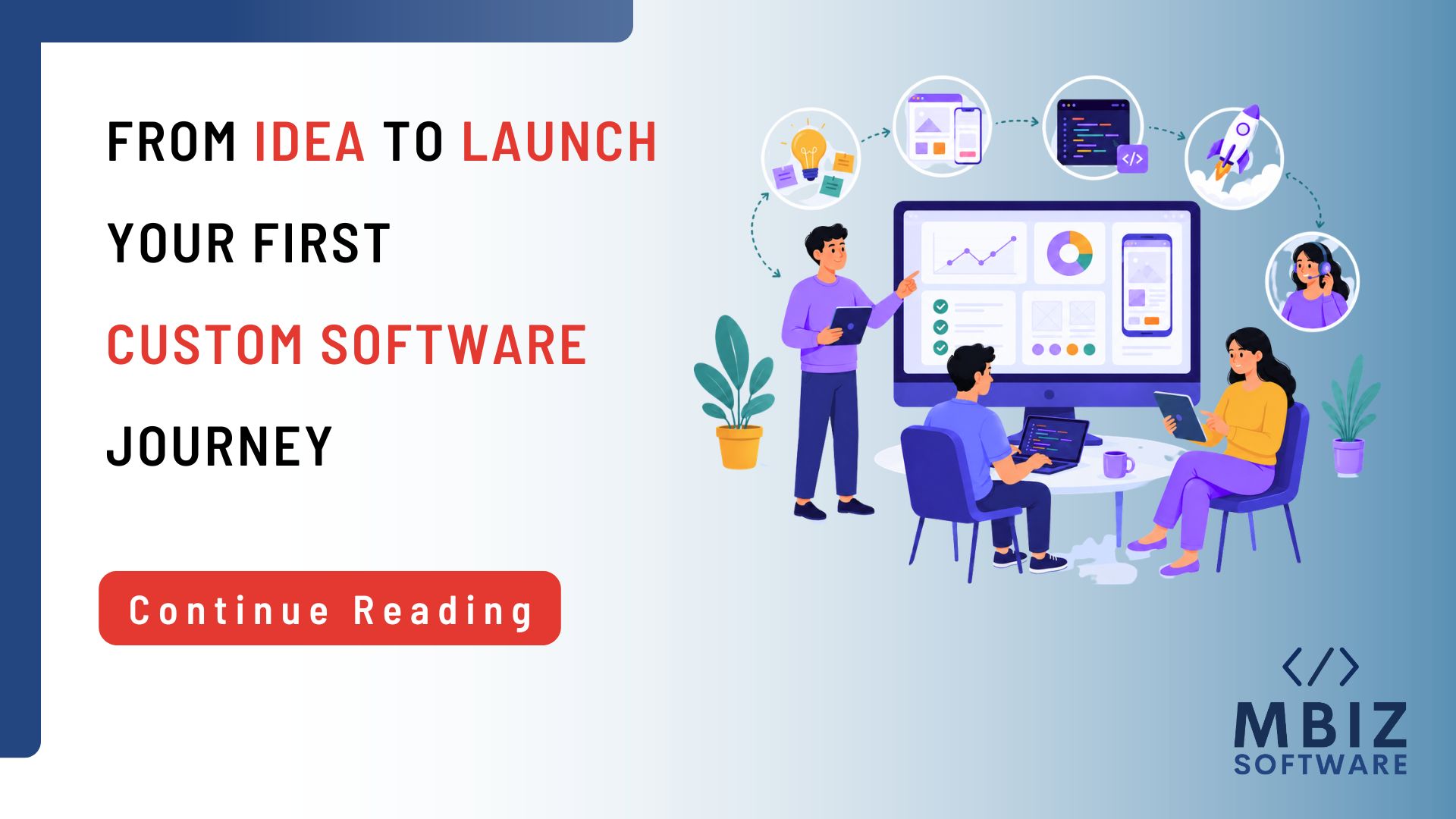
Building custom software for the first time can feel overwhelming. You are being asked to approve scope, timelines, and budgets for something that does not yet exist in a domain that may be unfamiliar. Most of the anxiety comes not from the project itself, but from not knowing what to expect at each stage. This guide removes that uncertainty. It walks you through the six phases of a typical custom software project at MBiz, from the first conversation to go-live. So you know exactly what happens, when, and what is required of you.
The Six Phases at a Glance
| # | Phase | Durations | What Happens |
| 01 | Discovery | 1-2 weeks | Goals, workflows, and requirements documented before any code is written. |
| 02 | Architecture & Design | 1-2 weeks | System architecture defined. UI/UX wireframes and prototypes produced for your approval. |
| 03 | Development Sprints | 4-12 weeks | Code written in structured sprints with demo updates at each milestone. |
| 04 | QA & Testing | 1-2 weeks | Software tested against real business conditions. Bugs resolved before delivery. |
| 05 | UAT & Go-Live | 1 week | You validate in your real environment. MBiz handles production deployment. |
| 06 | Post-Launch Support | Ongoing | Maintenance, updates, and support after launch – team already knows your codebase. |
Phase 1: Discovery – Building the Foundation
Before any code is written, MBiz works with you to fully understand your business problem, your existing processes, and what the software needs to achieve. This includes stakeholder interviews, process mapping, and documented requirements.
This phase typically takes one to two weeks and produces a clear scope and cost estimate. Projects that skip proper discovery are the ones that run over budget and fail to match real needs. Discovery is where the right decisions are made cheaply – before development makes them expensive to change.
Phase 2: Architecture and Design – Seeing It Before It Is Built
Once requirements are clear, MBiz defines the system architecture and produces UI/UX wireframes and interactive prototypes. This is where you see, for the first time, how the product will look and how users will navigate it.
This phase is critical for first-time buyers. Seeing a clickable prototype before full development begins lets you validate the design and catch misalignments when they are still cheap to fix. Changes to a wireframe cost hours. Changes to fully built features cost days. Never skip the prototype review.
Phase 3: Development Sprints – How the Software Is Built
Development happens in structured two-week sprints. At the end of each sprint, MBiz provides a working demo of what has been completed. You will not see a finished product after month one, you will see an evolving product that grows more complete with each cycle.
Your role here is to review the sprint demos and provide timely feedback. The faster you review, the faster the project moves. Delayed client feedback is one of the most common causes of project slowdowns. This is something both sides can control.
Phase 4: QA and Testing – Finding Problems Before You Do
Before the software is handed to you, it goes through structured quality assurance – tested against your defined requirements across real device and load conditions, not just ideal scenarios. MBiz’s ISO 9001 certified processes mean that QA follows documented pass criteria, not informal checks. Bugs found in QA cost far less to fix than bugs found after launch.
Phase 5: User Acceptance Testing and Go-Live
User Acceptance Testing (UAT) is where you and your team validate the software in your real business environment. You test actual workflows, confirm edge cases work as expected, and sign off before the product goes live. After UAT approval, MBiz handles the production deployment. Go-live is a milestone, but it is not the end of the engagement.
Phase 6: Post-Launch Support – The Work That Comes After
After launch, real users find edge cases that testing did not anticipate. Business needs evolve. New features become necessary. MBiz provides ongoing post-launch support with defined SLAs and a team that already understands your codebase, so you are never starting from scratch when something needs to change.
Frequently Asked Questions
| Q: How long does a custom software project typically take? A: It depends on the complexity of the project. A straightforward web application or internal tool may take 8 to 12 weeks from discovery to launch. A more complex platform with multiple integrations, user roles, and a mobile component may take 4 to 6 months. MBiz provides a detailed timeline estimate after the discovery phase before any development commitment is made. |
| Q: Do I need to have a detailed brief before approaching MBiz? A: No. Many first time clients come to MBiz with a business problem rather than a technical specification. The discovery phase is specifically designed to help you articulate and document your requirements. You do not need to know which technology stack or architecture is right for you, that is MBiz’s job. Coming with a clear understanding of the business problem you are trying to solve is enough. |
| Q: How much does custom software development cost? A: Custom software costs vary based on scope, complexity, number of integrations, and the technology stack involved. MBiz provides a detailed cost estimate following the discovery phase, when the scope is clearly defined. Attempting to estimate cost before discovery is done is usually inaccurate for both sides. Contact MBiz to begin the conversation and receive a tailored proposal. |
| Q: What happens if my requirements change during the project? A: Some degree of scope evolution is normal in every custom software project. MBiz manages this through a formal change request process. Changes are scoped, costed, and approved before they are built. This prevents scope creep from silently extending timelines and budgets. The sprint model also makes it easier to incorporate changes at defined points rather than mid-build. |
| Q: Who will I be communicating with during the project? A: MBiz assigns a dedicated point of contact for each project, typically a project manager or business analyst who coordinates between you and the development team. You will receive sprint updates, demo invitations, and documented communication at each milestone. You are never left waiting to find out where your project stands. |
Conclusion: Ready to Build Your First Custom Software?
Custom software development does not have to be opaque or unpredictable. With a structured process and a partner who communicates clearly, the journey from idea to launch is manageable – even for first-time buyers. Read next: Top 5 Software Development Mistakes Businesses Make.
MBiz Software guides you from idea to launch: ISO 9001 certified, fully transparent, and with post-launch support built in.