
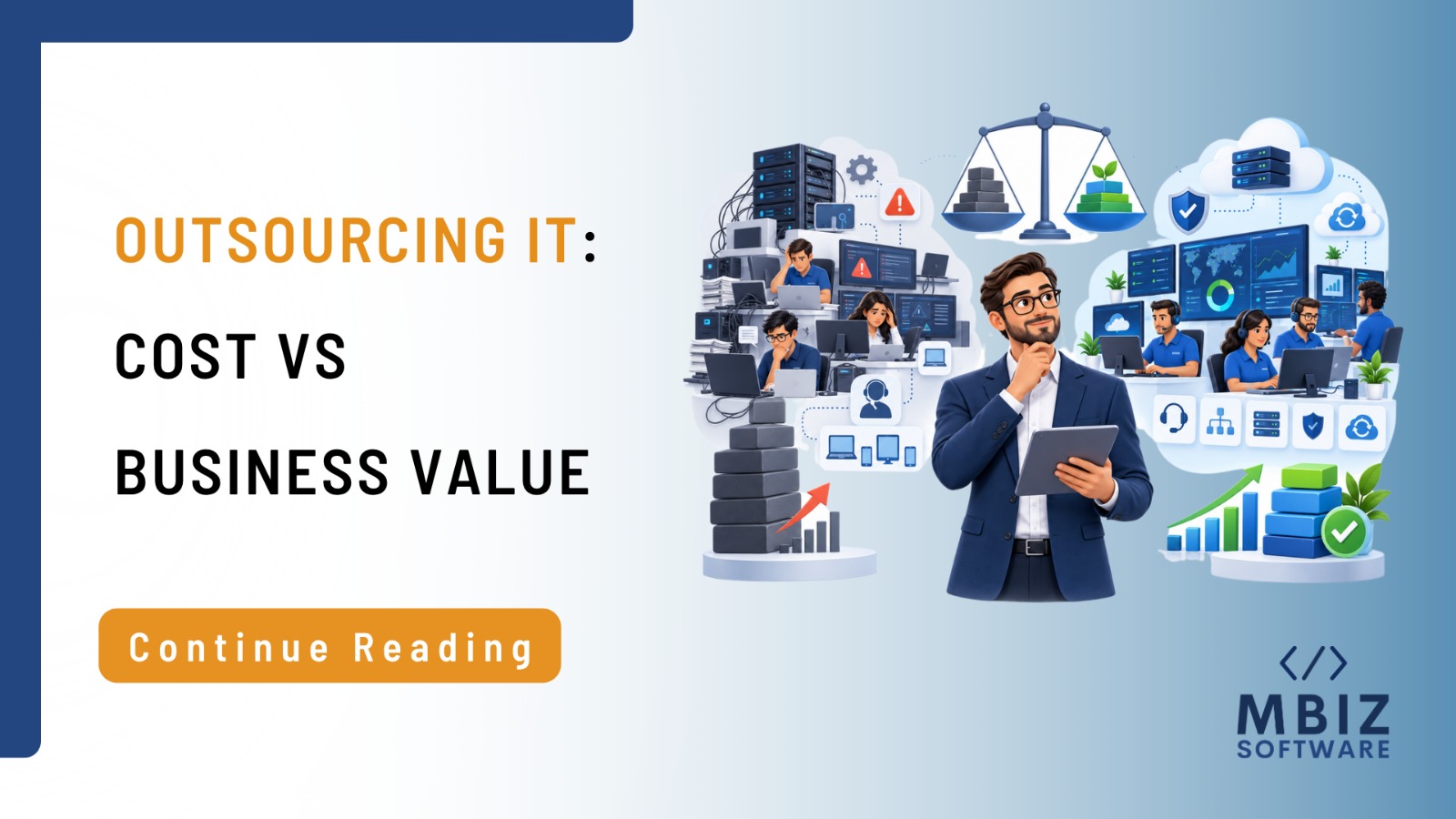
How much does IT operations outsourcing cost? The honest answer is that there is no standard price for every business. Costs vary depending on the services you need, the size and complexity of your IT environment, required support hours, technical expertise, infrastructure, security requirements, and service-level expectations.
For growing businesses, outsourcing IT operations can provide access to specialist expertise without the expense of building and maintaining a large internal IT department.
However, comparing providers based only on their monthly fee can be misleading. Two providers may offer very different levels of support, monitoring, technical expertise, and service coverage. Understanding what influences IT operations outsourcing cost can help you make a more informed decision and choose a service model that fits your business.
What Determines IT Operations Outsourcing Cost?
IT outsourcing pricing is shaped by several factors rather than one fixed rate.
1. Number of Employees and Devices
The number of employees, laptops, desktops, mobile devices, servers, and other endpoints affects the amount of support required.
A business with 25 employees will naturally have different needs from an organization managing hundreds or thousands of users and devices.
2. IT Infrastructure Complexity
A simple cloud-based environment requires a different level of support from an organization running multiple servers, networks, applications, cloud environments, and business-critical systems.
The more complex your environment, the more technical expertise and monitoring it may require.
Businesses may need:
- Business-hours IT support
- Extended support hours
- 24/7 monitoring
- 24/7 help desk support
- Emergency support
- On-call technical assistance
Round-the-clock IT operations generally require more resources than standard business-hours support.
4. Level of Technical Expertise
IT support is commonly divided into different levels of technical expertise.
L1 support handles common user and technical issues.
L2 support deals with more complex infrastructure, application, network, and systems issues.
L3 support provides advanced technical expertise for complex or critical problems.
The combination of L1, L2, and L3 support your business needs will influence the overall cost of an outsourcing arrangement.
5. Monitoring and NOC Requirements
Some businesses need proactive monitoring of networks, servers, infrastructure, applications, or other critical systems.
A Network Operations Center, or a broader Operations Center model, can provide continuous monitoring and structured incident management. These additional capabilities will also affect the cost.
What Are the Common IT Outsourcing Pricing Models?
IT outsourcing providers may structure their services in several different ways.
Per-User or Per-Device Pricing
Some providers base their pricing on the number of supported users or devices.
This model can make budgeting relatively simple, especially when the IT environment is standardized.
A business may choose to outsource only specific services, such as:
- Help desk support
- Network monitoring
- Server management
- Cloud support
- Infrastructure monitoring
- Application support
With this model, you pay for the services you actually need.
A provider may offer a defined group of IT services for a recurring monthly fee.
This can make budgeting more predictable, provided that responsibilities, service levels, and exclusions are clearly documented.
Businesses with more complex requirements may choose a dedicated IT operations team.
The cost will depend on the number of professionals required, their technical expertise, coverage hours, responsibilities, and the overall scope of the service.
How Much Does 24/7 IT Operations Support Cost?
24/7 IT support usually costs more than business-hours support because it requires continuous monitoring, response, escalation, and operational coverage.
However, businesses should not compare the cost of outsourcing with the salary of a single internal IT employee.
An internal 24/7 model may require several employees to cover shifts, weekends, holidays, leave, specialist escalation, monitoring tools, management, training, and other operational expenses.
A more accurate comparison is:
The total cost of maintaining the required IT operations capability internally
versus
The total cost of obtaining an equivalent capability through outsourcing.
What Are the Hidden Costs of Managing IT In-House?
When calculating the cost of internal IT operations, employee salaries are only part of the picture.
Other costs may include:
- Recruitment
- Employee benefits
- Training
- Leave coverage
- IT management tools
- Monitoring software
- Infrastructure
- Hardware
- Specialist consultants
- After-hours support
- Cybersecurity tools
- Disaster recovery
- Downtime and productivity losses
This is why you should evaluate IT operations outsourcing based on total operational value, not just the monthly service fee.
What Should Be Included in an IT Operations Outsourcing Quote?
Before comparing providers, make sure you understand exactly what each proposal includes.
A quote should ideally explain:
- Number of supported users
- Number of supported devices
- Support hours
- Help desk responsibilities
- L1/L2/L3 support
- Infrastructure monitoring
- Network operations
- Incident management
- Escalation procedures
- Response and resolution targets
- Reporting
- Security responsibilities
- Onboarding and transition
- Additional charges
- Service exclusions
A lower-priced proposal may not offer better value if it excludes important services or charges them separately.
How to Compare IT Operations Outsourcing Quotes
Price should be only one part of your evaluation.
Compare providers based on:
Service scope: What exactly is included?
Technical expertise: Does the provider have the skills your environment requires?
Availability: What support coverage is provided?
SLAs: What response and resolution targets are defined?
Monitoring: Is the provider proactive, or mainly reactive?
Security: How are your systems and access protected?
Reporting: Will you receive regular performance updates?
Scalability: Can the provider support your future growth?
Communication: How are incidents and escalations handled?
This gives you a much more accurate comparison than looking at the monthly price alone.
When Is IT Operations Outsourcing Cost-Effective?
IT operations outsourcing can be particularly valuable when a business:
- Needs specialist IT expertise
- Has a small internal IT team
- Requires 24/7 monitoring
- Is experiencing rapid growth
- Needs better infrastructure visibility
- Wants to reduce repetitive IT work
- Needs L1-L3 technical support
- Wants more predictable operational costs
- Is expanding its cloud or digital infrastructure
Outsourcing can also free internal IT teams to focus on strategic projects instead of spending most of their time handling routine operational issues.
How MBiz Supports IT Operations Outsourcing
The right outsourcing model depends on your organization’s needs.
MBiz Software provides different IT operations support models, including co-managed IT operations for organizations that already have an internal IT department and dedicated IT operations teams for businesses that need more comprehensive operational support.
The MBiz Operations Center brings together capabilities such as 24/7 IT Monitoring, IT Help Desk Support, Network Operations, Infrastructure Support, and Incident & Escalation Management. The service offering also includes L1, L2, and L3 technical expertise, flexible outsourcing models, experienced IT professionals, and an ISO-certified organization.
For businesses evaluating outsourcing, this means the conversation can focus on the operational model they actually need rather than simply choosing the lowest-priced provider.
Contact MBiz Software for IT Operations Outsourcing inquiries.
Final Thoughts on IT Operations Outsourcing Cost
There is no universal answer to the question, “How much does IT operations outsourcing cost?”
The right cost depends on your users, devices, infrastructure, support requirements, technical complexity, monitoring needs, security requirements, and expected service levels.
The best approach is to define the services you need first, then compare providers based on scope, expertise, reliability, security, scalability, and overall value.
For growing businesses, the right IT operations outsourcing model can provide access to specialist capabilities while making technology operations more predictable and easier to manage.
Frequently Asked Questions
How much does IT operations outsourcing cost?
It depends on the service scope, number of users and devices, infrastructure complexity, support hours, technical expertise, monitoring requirements, and SLA expectations.
Is 24/7 IT support more expensive?
Usually. Continuous support requires additional resources for monitoring, response, escalation, and operational coverage.
What affects IT outsourcing pricing the most?
Support coverage, infrastructure complexity, number of users and devices, L1-L3 support requirements, monitoring, and service-level expectations are some of the biggest factors.
Is IT outsourcing cheaper than an internal IT team?
It can be, but businesses should compare the total cost of internal staffing, recruitment, training, tools, infrastructure, specialist expertise, and after-hours coverage.
What should I ask an IT outsourcing provider before signing?
Ask about service scope, support hours, SLAs, escalation, security, monitoring, reporting, onboarding, exclusions, additional charges, and scalability.
Can a business outsource only part of its IT operations?
Yes. Businesses can use co-managed models or outsource selected functions such as help desk support, network operations, infrastructure monitoring, or other IT services.